
Choosing the right camera for portrait photography goes beyond simply pairing it with a great lens, although that remains a crucial starting point. A strong portrait lens provides flattering focal lengths and that beautifully soft background blur, but the camera body itself brings essential advantages. Features such as dependable eye-detection autofocus help keep your subject perfectly sharp, while image stabilisation allows for cleaner, more confident handheld shooting.
Sensor size also plays an important role. Full-frame and medium format cameras naturally deliver greater separation between subject and background, adding depth and a sense of presence to portraits. That said, APS-C and Micro Four Thirds systems are more than capable of producing exceptional results when matched with the right lenses.
In this guide, we’ve selected the best cameras for portrait photography based on extensive hands-on testing. There are options here for every budget, from accessible entry-level models to professional-grade tools. Whether you’re just beginning your portrait journey or refining an established practice, you’ll find a camera to suit your needs. We’ve also included advice on what to look for in a portrait camera and explained how each model was tested.

Gareth is the Reviews Editor at Digital Camera World and the person in charge of approving all the latest camera-related tech. With several years of experience as a professional portrait photographer, he knows exactly what to look for (and avoid) when choosing a camera for portraiture. Outside of photography, expect to find him cycling around London, or deep in a Netflix binge.
Best camera for portraits in 2026
Why you can trust Digital Camera World Our expert reviewers spend hours testing and comparing products and services so you can choose the best for you. Find out how we test.
Best camera for portraits overall

✅ You want the highest resolution possible: Medium format is the pinnacle of portrait photography, and with a 100MP sensor is best in class
✅ You want something compact: While medium format cameras are usually massive cameras, the GFX 100S II is surprising small, perfect for handheld shots.
❌ You don't like joysticks: Its 8-way rear joystick takes a lot of getting used to, which can make the experience harder to enjoy
❌ You want 8K video: You are limited to 'only' 4K30p which is a shame with such a massive sensor
In the days of film, medium format used to be the only choice for serious portrait photography. If you want to recreate that distinct medium format look in the digital realm, Fujifilm's GFX 100S II is our recommendation. While not what you'd call cheap, the GFX series of cameras have made medium format much more affordable than it used to be, while also being comparatively light on their feet. The GFX100S II feels and handles more like a full-frame mirrorless cameras than the heavy, ponderous medium format cameras of yore.
For portraiture, a 102MP medium format sensor is an absolutely sublime asset. The original GFX 100S had exactly that, and this new version doesn't mess with perfection, instead simply improving the autofocus, handling and stabilization. The images this camera produces are simply superb, as borne out by our testing both in the lab and in the field. Dynamic range, detail, noise control – all of it is simply top-tier.
The GFX100S II isn't much of an advancement over the previous model, but it doesn't need to be, and Fujifilm has sensibly elected not to hike up the price, instead actually reducing it slightly. That pretty much cements the GFX 100S II as the best you can get for portraiture in terms of medium format, and we can recommend it without hesitation.
Fuji's GFX medium format cameras have a 0.79x crop factor, which means that you might need to go a little longer than the full-frame equivalent, I would recommend the Fujifilm GF 110mm f/2 R LM WR, or if you want a bit of zoom flexibility, the Fujifilm GF 100-200mm f/5.6 R LM OIS WR.
Read more: Fujifilm GFX 100S II review
Lab results | Score | Rating |
|---|---|---|
Resolution (ISO 200) | 59/60 | ★★★★★ |
Dynamic range (ISO 200) | 12 EV | ★★★★ |
Noise (ISO 200) | 40 decibels | ★★★★ |
Best full-frame portrait camera

✅ You want the best: With high-resolution 45MP stills, AI-powered upscaling, and 8.5 stops of stabilization, this is as good as it gets for portraits
✅ You want a pro workhorse: The R5 II is built like a tank and is designed to be used by professionals day-in-day-out
❌ You're on a budget: While the best out there in full-frame that does come with a massive cost.
❌ Your computer isn't up to the job: processing all those huge 45MP raw files needs a serious computer.
The EOS R5 was an astonishingly good camera (much-publicized overheating issues notwithstanding), and represented a new benchmark for full-frame professional mirrorless. Four years on, the EOS R5 Mark II has done it again – this camera genuinely feels like the future of photography, and for portraiture, it's basically unmatched.
Like its predecessor, the EOS R5 Mark II uses a 45MP full-frame sensor. However, this new model is equipped with the latest Neural Network Image Processing features. Powered by AI, these allow the EOS R5 Mark II to upscale its files from 45MP to a monster 180MP, giving you latitude to essentially print as large as you like, which is a big deal in portraiture. The new computational processes also give the camera sophisticated de-noising capabilities, essentially giving you two extra stops of ISO sensitivity to play with.
When you combine all this with the latest version of the best autofocus system in the business in the form of Canon's Dual Pixel Intelligent AF, as well as a stabilization system that provides up to 8.5 stops of compensation, the EOS R5 Mark II starts to look like the camera that can do anything. Its price tag is undeniably a big ask, but for professionals with budget, we're comfortably calling this the best portrait camera available right now.
Canon has a great choice of RF portrait lenses, too, and we love the Canon RF 85mm f/1.2L USM. It's a hefty lens with a hefty price tag, but camera-lens portrait combinations don't come better than this. You can also adapt Canon's vast range of EF-mount DSLR lenses, too.
Read more: Canon EOS R5 Mark II review
Best budget camera for portraits
✅ You want uncropped 4K: Despite the low price, you still get full-frame 4K video which is more than can be said for some new cameras on the market.
✅ You're on a budget: You are not giving up too many specs to keep down the pennies
❌ You want high resolution: 26MP isn't bad at all but those wanting more megapixels need to look elsewhere
❌ You want high burst mode: At just 5 frames-per-second, it's a little slow compared to modern standards
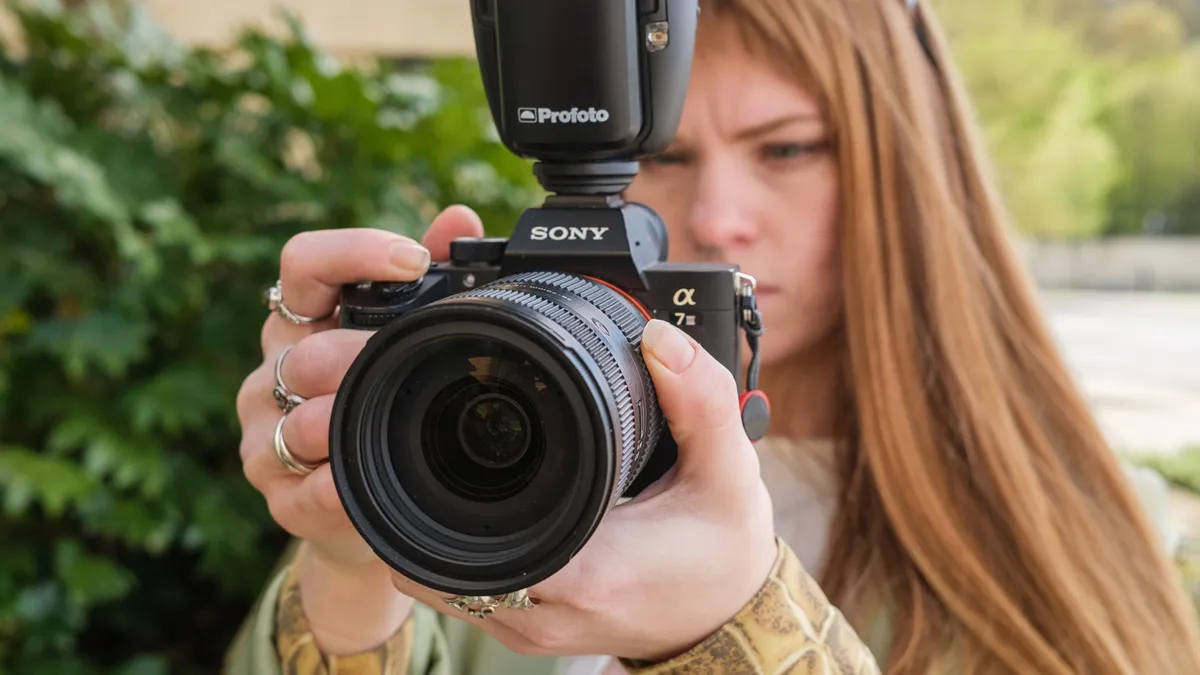
So you're just getting started in portrait photography and you don't want to spend a lot of money to get set up with a great portrait camera? Well, look no further than the Sony A7 III.
This full-frame mirrorless camera is getting on a bit now and has even been superceded by the Sony A7 IV, but there is no stopping the popularity of the Mark III version with it offering the perfect balance of features and cost. The A7 III offers a now comparatively small 24MP sensor, although that will still net you plenty of image quality for small and medium-sized screens or prints.
The A7 III also has super useful features like eye detection autofocus and in-body image stabilization, that will help any photographer, fresh or experienced, just get more reliable images.
As mentioned, all this can be had at quite a bargain compared to newer Sony cameras (and most rivals), and stock is still easy to come by, with regular discounts during sales events like Black Friday, so keep checking prices regularly to save even more!
Read more: Sony A7 III review
Lab results | Score | Rating |
|---|---|---|
Resolution (ISO 200) | 58/60 | ★★★★★ |
Noise (ISO 200) | 48 decibels | ★★★★★ |
Best portrait camera for resolution

✅ You want the best full-frame camera: With a high resolution of 61MP, fast AF, and amazing lenses - this is as good as it gets for full-frame.
✅ You want 8K video: Though cropped, this beast can churn out 8K video that looks fantastic, perfect for some BTS action.
❌ You have limited storage: 61MP images are massive in size, so you need to make sure you have enough storage to carry on taking images
❌ Your computer isn't up to the job: processing the 61MP images needs a serious computer.
If you’re looking for the most detail possible in a full frame camera, then the Sony A7R V should be at the top of your list. Toting a spectacular 61MP sensor, making it the highest resolution camera without going medium format, it’s the ideal choice for those who favor portraits with ridiculous levels of detail.
I am a big fan of Sony’s Eye AF, which can not only recognize human eyes but animals' too, and the new AI-powered autofocus can also detect subjects by limbs and body shape – so nailing portrait focus is as simple as can be.
Other fantastic features include a super-high resolution viewfinder and a useful tilting touchscreen. The A7R IV is pretty pricey, and there is the cheaper Sony A7 IV – but it's not a lot cheaper.
Sony has been in the full-frame mirrorless game the longest, so its lens line-up is the broadest, with some stunningly sharp G Master lenses to elevate your portraits to the next level. Our recommendation is the Sony FE 85mm f/1.4 G Master, a stunning portrait lens that's the perfect partner for the A7R V’s high-resolution sensor. Consider the Sony FE 85mm f/1.8 lens if your budget is tighter.
Read more: Sony A7R V review
Lab results | Score | Rating |
|---|---|---|
Resolution (ISO 200) | 45/60 | ★★★★★ |
Dynamic range (ISO 200) | 11 EV | ★★★ |
Noise (ISO 200) | 40 decibels | ★★★★ |
Best phone for portraits

✅ You want RAW photos in your pocket: With the latest edition iPhone Apple gives you RAW images to edit and color grade to your heart's content.
✅ You want something with you all the time: Thanks to the iPhone 15 Pro Max offering such a good camera, your camera is always with you wherever you go!
❌ You want something professional: While a phone is great and always on you - it doesn't offer much confidence when shooting for clients
❌ You want a big-sensor look: the iPhone's 1/1.28in sensor is much, much smaller than other cameras in this guide
Okay, this might be cheating a little and you probably didn't expect to see a phone gracing this list, but hear me out – we are now at the point where phone cameras are rivaling what dedicated cameras can achieve, and the iPhone 15 Pro Max is the pinnacle of that.
Just slightly edging out the Google Pixel 9 Pro (which is my top recommendation for Android fans), the portrait mode on the iPhone is class-leading. This might be down to Apple's LiDAR technology that uses lasers to take a 3D map of a subject, or just some superior computational computing inside the phone, but either way, it is getting harder and harder to tell that a photo was "shot on iPhone".
The iPhone 15 Pro Max is the first phone from Apple to feature a 5x camera, which in full frame lens terminology is around 120mm, which is right in the sweet spot for beautiful subject isolation from the background, as well as compressing a person's features into the most flattering perspective. This combined with Apple's portrait mode blur, AI-driven portrait lighting, and just the ease of all this being a few taps away in a single device that slips into your pocket makes this a real winner for portrait photography.
Read more: Apple iPhone 16 Pro Max review
Best portrait camera for enthusiasts
✅ You want fast focus: Equipped with Canon's Dual-Pixel AF this thing will focus before you do.
✅ You want fast FPS: With up to 40-frames-per-second continuous shooting you will never miss a moment
❌ You want the biggest buffer: Sadly the R6 Mark II only use SD cards, not the faster CFexpress cards
❌ You want unlimited video recording: 4K video recording is limited to just 30 minutes
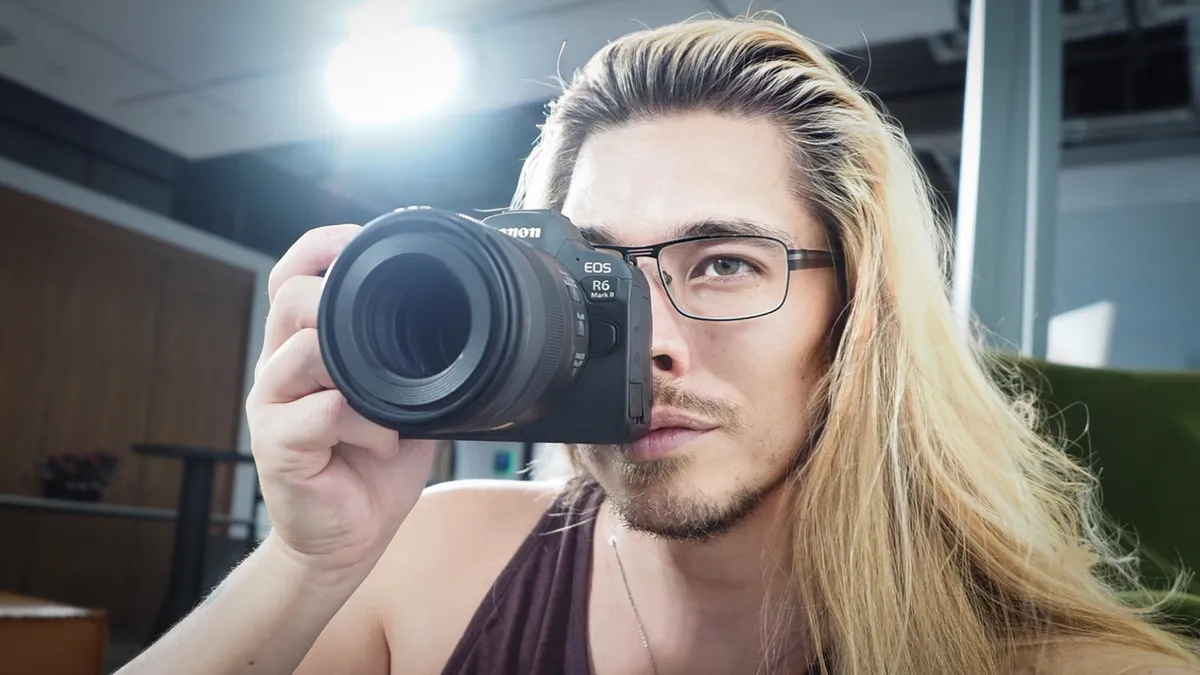
Canon's EOS 6D series came along and revolutionized the DSLR market for enthusiasts, taking the flagship EOS 5D of the moment, but stripping it down to the essentials to include some seriously good specs for an affordable price. As Canon moves to mirrorless, the Canon EOS R6 Mark II is a worthy successor to that mantle.
Now the 24.2MP isn't the highest around, so it depends on how you plan to display the portraits you take, but that is plenty of resolution to display on screens or in medium-sized prints. What the R6 MII does have going for it though is one of the best autofocus systems in town. I am continually blown away by how fast and accurate Canon's subject detection autofocus is, picking up subjects' eyes in milliseconds and tracking them across the frame. And this isn't just for people, if you fancy taking some pet portraits, then the R6 Mark II has animal eye detection too.
If you want to step outside of portraits, then the EOS R6 Mark II has benefits from beautiful oversampled 6K video in 4K 60p video, a very quick shutter speed for fast-moving subjects, a silent electronic shutter, and compatibility with Canon's excellent RF lenses.
If you want to capture beautiful portraits then I would recommend looking at the Canon RF 85mm f/2 Macro IS STM for an affordable but quality portrait lens, or if you really want to splash out then the Canon RF 135mm f/1.8L IS USM is sublime.
Read more: Canon EOS R6 Mark II review
Lab results | Score | Rating |
|---|---|---|
Resolution (ISO 200) | 24/60 | ★★★ |
Dynamic range (ISO 200) | 12 EV | ★★★★ |
Noise (ISO 200) | 43 decibels | ★★★★ |
Comparisons and Lab Data
How to choose the best portrait camera
Choosing the best portrait camera really depends on how you intend to display your portraits. If you want to create big prints to display on a wall at home or in a gallery then you should take a look at the cameras on this list with high-resolution sensors like the Sony A7R V, or if you are looking to go very high-end, the Fujifilm GFX 100S.
If you are only looking to display your portraits on screens – maybe via social media or a website – and while all the cameras on this list would make exceptional portrait cameras for this purpose, you can get away with using a much lower-resolution camera and save some money or get a smaller camera.
So how do you choose between all the cameras in this guide? Well, one of the first decisions to make is simply which one best fits your budget the best, and there is a range of options here. But it isn't just the camera to think about, also take a look at some of the suggested lenses listed in this guide, as that can push the price into unaffordable territory, and a camera is only as good as its lens when it comes to portraits.
Other factors to consider are how big would you want your camera to be – if you want something to slip into a pocket then take a look at some of the smaller cameras on this list, like the Fujifilm X-T5, or even the iPhone 15 Pro Max. If you don't care, then go the other way and get the Fujifilm GFX 100S, if you can afford it.
How we test portrait cameras
When testing portrait cameras, we focus on what truly matters—how well they capture portraits. Our reviewers take real-world portrait shots, evaluating key aspects such as autofocus accuracy in detecting human (or animal) faces and eyes, ease of use, and overall image quality for portrait photography.
In addition to field testing, each camera undergoes rigorous lab testing. We measure resolution using ISO resolution charts, assess dynamic range with DxO Analyzer test equipment, and analyze noise performance across the ISO range using the same tools.
By combining hands-on experience with precise lab data, we ensure that our recommendations in this guide are based on both real-world usability and technical performance, helping you choose the best camera for portrait photography.
Find out more about how we test and review on Digital Camera World.
FAQs
Do I need a full-frame camera for portraits?
Not at all. Full-frame cameras are often the go-to for portrait photography because their larger sensors deliver superb dynamic range and natural background separation - but that doesn’t mean smaller sensors can’t hold their own. With the right lens, APS-C and Micro Four Thirds cameras are well-equipped to produce beautiful portraits.
The trick lies in choosing a fast lens with a wide maximum aperture and keeping the crop factor in mind - around 1.5x or 1.6x for APS-C, and 2x for Micro Four Thirds. Get the pairing right, and even a smaller-sensor setup can deliver results that look every bit as professional as full-frame.
Are DSLR cameras good for portraits?
Absolutely. While mirrorless cameras lead in technology, DSLRs have captured countless iconic portraits - and will continue to do so. Our list includes standout DSLRs like the Canon EOS 6D Mark II, and there are plenty more excellent options for portrait photography.
With mirrorless cameras taking center stage, many DSLRs and lenses are now available at significant discounts, making them a budget-friendly way to get a high-quality portrait setup without compromising on performance.

