
The best lenses for bird photography solve many of the key challenges of this tough but rewarding discipline of photography. Getting close enough to a skittish bird without scaring it into flight can be a tricky thing, so strong telephoto reach is a must. The lens must also deliver enough detail and quality to get satisfying results, preferably with a wide enough aperture to allow you to use fast shutter speeds for freezing motion in its tracks. However, wide apertures aren't as important as they used to be, if you're using a recent mirrorless camera with good autofocus abilities and high-ISO performance.
My list of best buys includes some of the best telephoto lenses that I've tested, all of which I think will excel for bird photography. Fast-focusing and capable of producing crisp, punchy images, these lenses will deliver brilliant bird shots that fill the frame with your avian subject, whether you're out in the wild or photographing at your garden feeder.
I've included options for all the major lens mounts in use today, including both mirrorless and DSLR systems, so whatever camera you use, I should have you covered. Also, if you can't get enough birdwatching, you might also get some use out of our best bird feeder camera guide as well!

As Digital Camera World's principal lens reviewer, Matthew brings his seasoned expertise to picking out the best lenses for bird photography – and the lenses on this list are his top recommendations.
Best lenses for bird photography
Why you can trust Digital Camera World Our expert reviewers spend hours testing and comparing products and services so you can choose the best for you. Find out how we test.
Best Canon RF
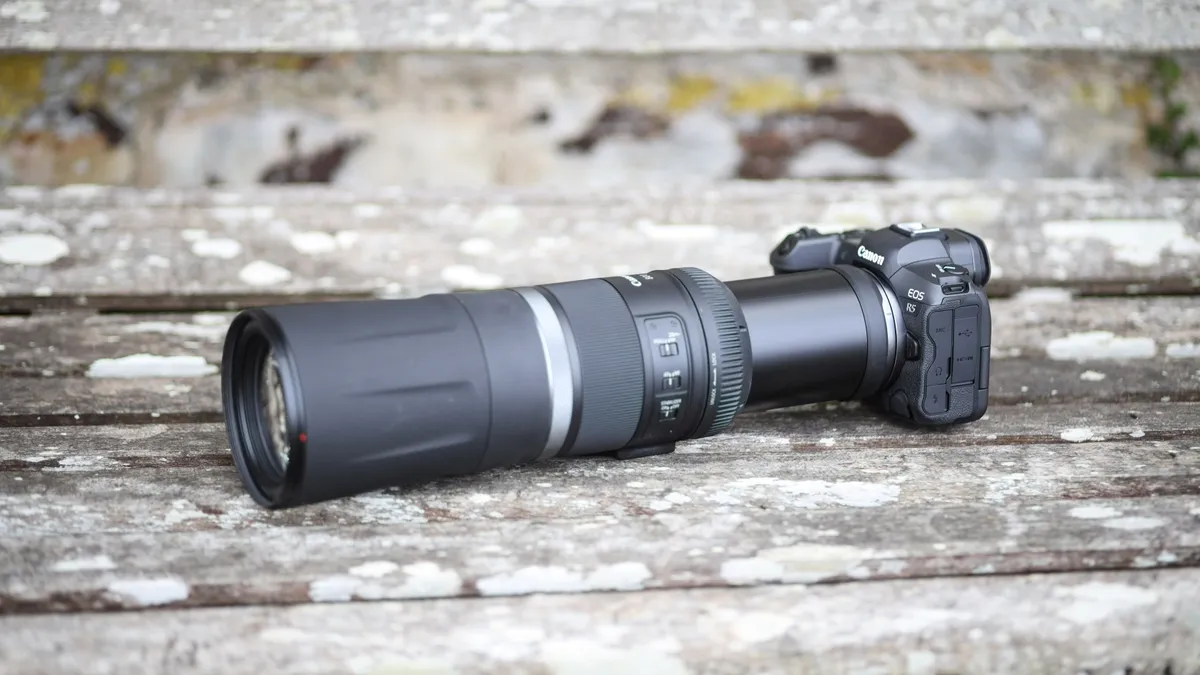
✅ Phenomenal Reach: Provides excellent reach with an 800mm focal length, ideal for wildlife and sports photography.
✅ Compact and Lightweight: Smaller and lighter than competing DSLR lenses, weighing only 1,260g, making it suitable for long periods of handheld shooting.
❌ Fixed Aperture: The f/11 fixed aperture may be considered too narrow by some, limiting low-light performance and depth of field control.
❌ Lack of Aperture Adjustment: The inability to alter the aperture might be disappointing for photographers who prefer more control over exposure settings.
The Canon RF 800mm f/11 IS STM super-telephoto lens for Canon EOS R-series full-frame mirrorless cameras gives phenomenal reach but is much smaller and more lightweight than competing lenses for DSLRs, and relatively inexpensive to buy.
The lens has a fixed aperture of f/11, and many birders might consider that rather too narrow, while others might be unimpressed that you can’t alter the aperture. However, the modest f/11 rating enables a relatively compact and lightweight build with smaller-diameter lens elements.
At 1,260g, it’s perfectly viable for long periods of handheld shooting, aided by a highly effective optical image stabilizer. It also has a retractable mechanism to cut down on stowage size, making it ideal for use anywhere and everywhere, from local locations to wildlife shoots in far-flung corners of the world.
Read more: Canon RF 800mm f/11 IS STM review


Best Nikon Z

✅ Reliable for Wildlife Photography: Designed to capture definitive moments in wildlife photography with great reliability.
✅ More Affordable: While not cheap, it is less than half the price of the Nikon Z 400mm f/2.8 TC VR S, making it a more accessible option for serious photographers.
❌ Modest Aperture: The f/6.3 aperture, while helping to reduce weight, is relatively modest, which limits low-light performance and depth of field control.
❌ High Price: Despite being more affordable than some alternatives, it still represents a significant investment.
This lens gives you telephoto superpowers in a relatively lightweight package. The downsized build has been achieved by a modest f/6.3 aperture rating and a Phase Fresnel optical element, a technology that’s commonly used to focus the beam in a lighthouse. The addition of highly effective optical VR that works in tandem with IBIS in Z system full-frame cameras should ensure exceptionally sharp avian images.
A useful range of handling extras ensures top-quality results time after time, with excellent consistency even in handheld shooting. When you need to nail the definitive moment in bird and wildlife photography, this is a lens you can surely count on. It's not cheap, but less than half the price of the Nikon Z 400mm f/2.8 TC VR S.
Read more: Nikon Z 800mm f/6.3 VR S review


Best Sony FE
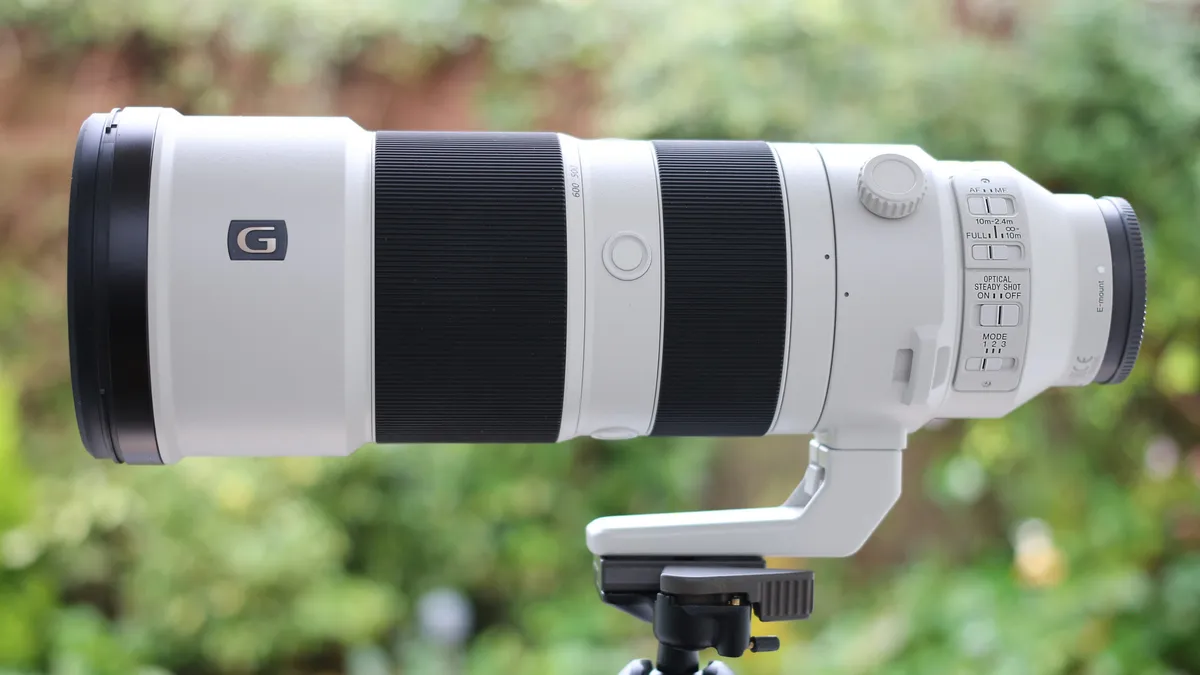
✅ Super-Fast Autofocus: Features DDSSM (Direct Drive Super Sonic Motor) autofocus, which is exceptionally fast and precise, with customizable focus-hold buttons around the barrel.
✅ Excellent Image Quality: Delivers sharpness, contrast, and consistency throughout the entire zoom range.
❌ Imposing Size and Weight: While typical for its class, the lens can feel a bit imposing on lighter Sony Alpha mirrorless bodies, which might affect handling.
This own-brand Sony lens has the same 600mm maximum focal length as the independent Sigma 150-600mm f/5-6.3 DG DN OS Sports, which is another excellent choice for Sony mirrorless cameras. This Sony’s size and weight are fairly typical, but feel a little more imposing on comparatively lightweight Sony Alpha mirrorless bodies.
The maximum ‘effective’ focal length stretches from 600mm to around 900mm when shooting on an APS-C camera. Triple-mode image stabilization is switchable for static and panning shots, with an additional option for applying stabilization only during exposures. This makes it easier to track the erratic movement of birds in flight. DDSSM (Direct Drive Super Sonic Motor) autofocus is super-fast and comes complete with customizable focus-hold buttons mounted around the barrel.
The optical image stabilizer is effective on its own and even better when coupled with in-body stabilization, featured in later Sony Alpha A7 and A9 mirrorless cameras. Sharpness, contrast, and other image attributes are excellent and very consistent throughout the entire zoom range.
Read more: Sony FE 200-600mm f/5.6-6.3 G OSS review


Best Fujifilm X
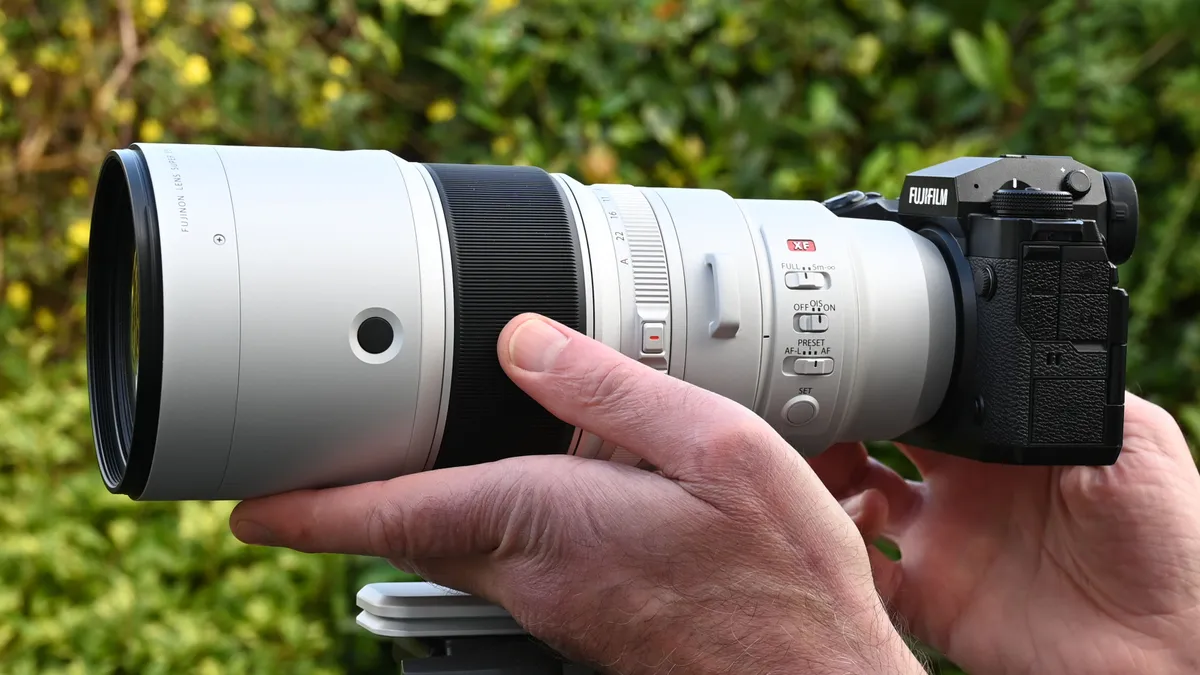
✅ Effective Stabilization: Equipped with a high-performance 4.5-stop optical image stabilizer to reduce camera shake and improve sharpness.
✅ Designed for APS-C: Built specifically for APS-C format cameras, optimizing performance for this sensor size.
❌ No stabilization switch: There's no switch for selecting separate static and panning modes for the optical stabilizer.
❌ Fixed focal length: As a prime lens, it naturally lacks the versatility of a super-telephoto zoom.
This Fujifilm looks like an imposing lens, as I’d expect from a 500mm super-telephoto prime. Even so, it’s compact and lightweight for its type, measuring 105x256mm, or 10.1 inches long, and weighing in at an eminently manageable 1,335g (2.94lb). That puts handheld bird and wildlife photography firmly on the agenda. Better still, the ‘effective’ reach is boosted to a focal length of 762mm, thanks to the Fujifilm X system’s APS-C crop factor. With such powerful super-telephoto reach, the 5.5-stop optical image stabilizer certainly earns its keep.
Fast autofocus is backed up by plenty of high-end handling exotica, while the optical path boasts no less than five ED (Extra-low Dispersion) elements plus two Super ED elements. The aim is to optimize clarity, contrast, and sharpness while minimizing color fringing and other aberrations. I personally tested this lens with Fujifilm’s flagship Fujifilm X-H2 camera body, and found that it did full justice to the high-res 40MP sensor. All in all, it’s a cracking lens and the ultimate bird and wildlife photography choice for X system cameras, when you really need to cover the distance.
Read more: Fujifilm XF 500mm f/5.6 R LM OIS WR review


Best L-mount

✅ Fast Aperture: The f/5.6 aperture is pretty fast for a 500mm lens in this day and age.
✅ Speedy and Silent Autofocus: Autofocus is both fast and silent, making it ideal for capturing quick-moving birds without disturbing them.
❌ Lacks zoom versatility: 500mm is a good focal length for full-frame bird photography, even better for APS-C, but lacks the flexibility of a zoom lens.
❌ Bigger than some: It's refreshingly lightweight for a 500mm f/5.6 prime lens but can still feel a little large in handheld shooting.
Super-telephoto primes are generally thought of as being two things: prohibitively expensive and weighing an absolute ton. Bucking the trend, this Sigma is something of a welcome change in these regards and is available in both L-mount and Sony E (FE) mount options. At 1.3kg, it's not exactly lightweight, but it is nevertheless a lens you can use handheld for extended periods without feeling the strain. And at a list price of $2,999 / £2,779, it's not cheap, but it's much more accessible than the top-end super-telephoto primes, which can and do rack up five-figure price tags.
It's also a pretty brilliant lens in its own right, and is ideal for bird and wildlife shooting, with an effective five-stop stabilization system and super-fast autofocus action. The resolving power is more than capable of keeping up with the detail demands of high-resolution Sony sensors, and as I found in testing, it consistently produces images with plenty of punch and contrast, even on dull days.
Read more: Sigma 500mm f/5.6 DG DN OS Sports review


Best MFT

✅ Broad Focal Range: With an equivalent zoom range of 300-800mm, this lens allow you to keep a great deal of distance from skittish birds and capture close-up imagery with nice, tight framing.
✅ IPX1 Weather-Proofing: While it's not quite IP53, this is still a comprehensive level of weather-sealing that makes this lens well-suited to outdoor work – a must for wildlife photography.
❌ Bulk, Weight and Expense: This is a big and heavy lens, especially for Micro Four Thirds, weighing in at 2kg. It also comes with quite a hefty price tag.
❌ Not the Sharpest: While the M.Zuiko 150-600mm delivers solid results, especially in the middle of its aperture range, its sharpness scores lag behind rival lenses.
The Micro Four Thirds 2x crop factor can be a real blessing for bird and wildlife photography. Case in point: this OM System 150-600mm lens, which stretches to an 'effective' 300-1200mm zoom range when mounted to an OM System, Olympus or Panasonic camera (and can be extended to ludicrous further levels with a teleconverter). It's also heavily weather-sealed the way OM System lenses tend to be; it's not quite IP53, but IPX1 is still pretty darn good, and means you can use the lens outdoors in poor weather without fear.
Priced nominally at $2,699 / £2,499, this is certainly not a cheap lens, and is one of OM System's most expensive. However, there aren't many lenses that can cover a focal range this broad while still being both high-quality and hand-holdable, so you are getting something unique here. If you're frustrated with birds being scared off before you can get close enough to photograph them, this lens will allow you to maintain that distance and still get detailed, frame-filling images.
In our lab tests, the lens's sharpness received scores that were good rather than entirely great, but it's still a very good lens. In our real-world testing, it proved capable of producing bird images that are bright and contrasty, with plenty of detail in the feathers.
Read more: OM System M.Zuiko 150-600mm f/5-6.3 IS review


Best Canon EF

✅ Improved Zoom Mechanism: Replaces the original trombone-style push-pull zoom with a more conventional twist-action zoom ring.
✅ Refined Optics: Features a refined optical path with fluorite and Super UD elements, along with advanced Air Sphere coating for improved image quality
❌ High Cost: Considered expensive for a 100-400mm lens, which may deter some buyers.
❌ Limited Telephoto Reach: Lacks the extended telephoto reach offered by more recent 150-600mm lenses from independent brands.
Canon’s original EF 100-400mm zoom was something of a classic, but wasn’t to everybody’s taste, especially in regard to its trombone-style push-pull zoom mechanism. The second edition of the lens has a more typical twist-action zoom ring and a host of upgrades. These include a refined optical path with fluorite and Super UD (Ultra-low Dispersion) elements and high-tech Air Sphere coating.
There’s a more effective, triple-mode image stabilizer, and the Mark II also gains weather seals and fluorine coatings on the front and rear elements. It’s a superb lens but rather expensive for a 100-400mm zoom and lacks the outright telephoto reach of more recent 150-600mm independent designs.
Read more: Canon EF 100-400mm f/4.5-5.6L IS II USM review
Best Nikon F

✅ Constant Aperture: Features a constant f/5.6 aperture throughout the zoom range, providing consistent exposure and depth of field control.
✅ Great Value: Offers excellent value for an own-brand Nikon lens, especially with its constant aperture and advanced features.
❌ Limited Compatibility with Older Nikon Bodies: On older Nikon DSLRs, you can only shoot at the widest aperture, limiting versatility.
❌ Slightly Shorter Reach: Comes up slightly short in maximum reach compared to Sigma and Tamron 150-600mm zooms, though the difference is minor in practical use.
Compared with Sigma and Tamron 150-600mm zooms for Nikon DSLR cameras, this own-brand competitor comes up slightly short in maximum reach. Even so, the difference isn’t very noticeable in practical terms, and the Nikon lens has the advantage of a constant-aperture design, so f/5.6 remains available throughout the zoom range, rather than dropping to f/6.3 at the long end.
Fancy features include a dual-mode, 4.5-stop VR (Vibration System) system and an electromagnetically controlled diaphragm for adjusting the aperture. As in the Sigma and Tamron lenses, this enables more consistency in rapid-fire exposures, but with older Nikon bodies, you’ll only be able to shoot at the widest aperture.
Autofocus is fast, and image quality is impressive in all respects, making this lens great value for an own-brand Nikon.
Read more: Nikon AF-S 200-500mm f/5.6E ED VR review
Lab data and comparisons
The graph below shows the comparative performance of the lenses in this guide, based on our in-house lab tests. The Nikon Z 800mm f/6.3 VR S leads the way for sharpness, despite its phenomenal focal length, followed by the high-achieving Sony FE 200-600mm f/5.6-6.3 G OSS zoom and the more basic, fixed-aperture Canon RF 800mm f/11 IS STM.
Scores for sharpness and color fringing are averaged from data taken across the entire image frame, from the center to the edges and corners, throughout the aperture range. For zoom lenses, the scores are also averaged from data measured at four different marked focal lengths, from shortest to longest. The same applies to distortion.
Bear in mind that these average values don't fully reflect specific areas of performance. For example, a zoom lens might have noticeable barrel and pincushion distortion at its shortest and longest focal lengths, respectively, which tends to average out when looking at the data overall. For more detailed graphs of each lens's performance, which give the full picture, check out the graphs in our full standalone lens reviews.
How to choose a lens for bird photography
Birds are tricky subjects for even the most experienced wildlife photographers; they move quickly, don't stay still for long, and they generally won't let you get very close without flying off. Therefore, the best lenses for bird photography need to provide you with enough magnification to fill the frame with a feathery subject, while also offering fast enough autofocus to track it as it moves. This realistically means a telephoto lens – either a zoom or a prime. Both have their advantages, with zooms offering greater versatility and primes generally providing superior image quality.
When looking at lenses, consider how they'll interact with your camera sensor. Should you use a full frame or cropped sensor camera for bird photography? For sensors smaller than full-frame, there is a trade-off in terms of image quality but you'll get the advantage of a crop factor that amplifies the telephoto reach of the lens. For example, the best 100-400mm lenses on a full-frame sensor will cover 150-600mm on APS-C and 200-800mm on Micro Four Thirds!
While telephoto lenses used to be prohibitively heavy and expensive, these days the best telephoto lenses are getting lighter and in some cases more affordable. Plus, the proliferation of optical image stabilization systems make it possible to capture sharp images at the outer edge of a telephoto zoom, without having to use a tripod. That makes it easier to capture sharp, frame-filling images of birds.
How do I get started with bird photography?
When it comes to bird photography, one of the best things you can do to start off with is research. Look up the different types of birds that live in your local area – get a sense of their habits, their preferred habitats, their favourite foods.
If you have a garden then find a good spot to set up your camera and lens – if not, then a local park is a good bet. As well as your telephoto lens, it's a good idea to have a tripod, as you're likely going to need to be set up for a while. If you find a spot that local birds frequent, simply set up your camera and lens and wait for them to return. It may require some patience, but a sharp eye and a quick trigger finger will reward you with gorgeous birding images.
What camera settings should I use for bird photography?
The key is to get as fast a shutter speed as possible without compromising the quality of your image. Birds move quickly and erratically, and so you want to be able to freeze the action. Open up your aperture nice and wide, as this will not only allow for the use of fast shutter speeds, but also nicely throw out the background for a portrait-style image of a bird.
If your lens has a focus distance limiter, this might be handy to use in order to keep focus on the spot where you expect the bird to land, stopping the camera from focusing on the background. If you need to push the ISO a little, you can, but be careful – too much and you'll end up with a grainy, unappealling image.
How we test the best lenses for bird photography
We test lenses using both real world sample images and lab tests. Our lab tests are carried out scientifically in controlled conditions using the Imatest testing suite, which consists of custom charts and analysis software that measures resolution in line widths/picture height, a measurement widely used in lens and camera testing. We find the combination of lab and real-word testing works best, as each reveals different qualities and characteristics.
